



Japan through a service design lens
Aishwarya Venkateswaran
30 Jul 2026
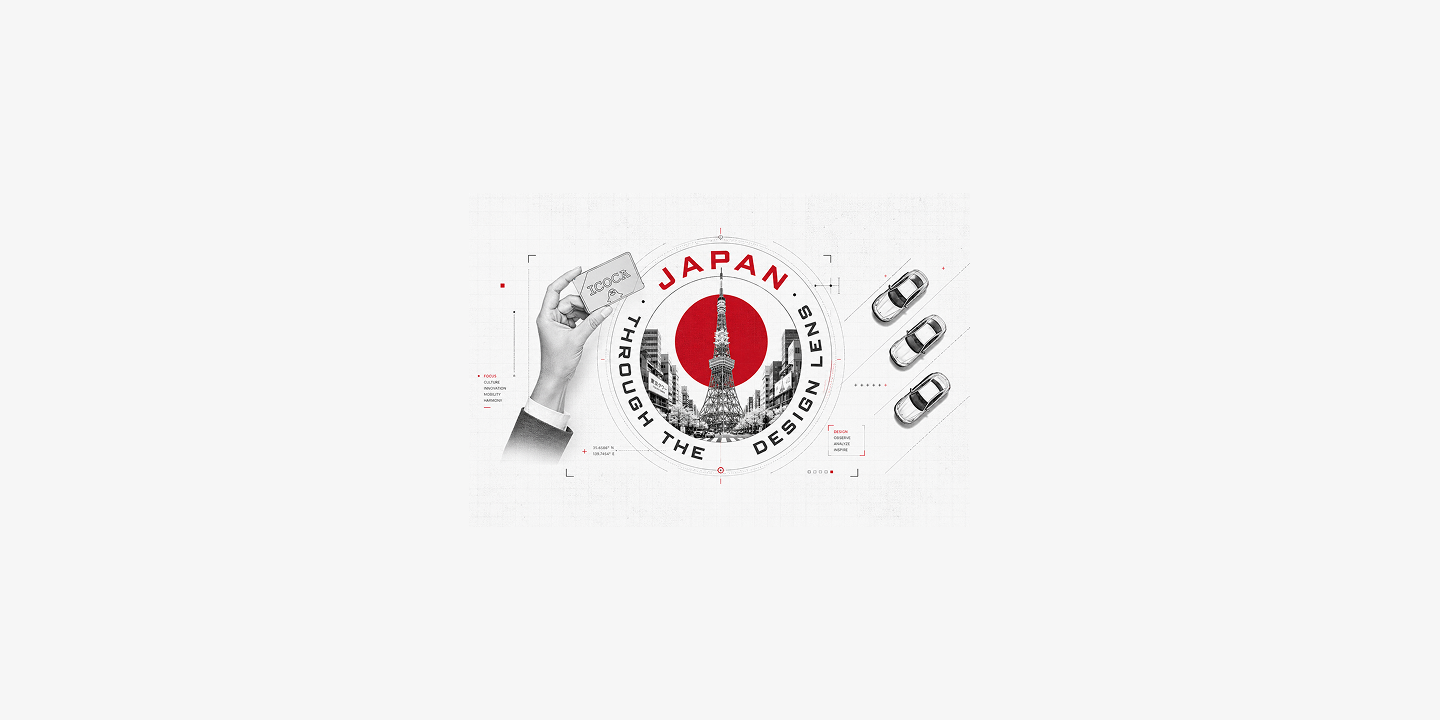
A road trip across a country where nothing feels accidental
This trip started as a road trip with friends. Driving across cities, figuring things out as we went. But somewhere between quiet Tokyo trains, late-night convenience store runs, Kyoto’s shrine paths, and public washrooms cleaner than most hotel ones back home, something shifted.
I stopped noticing places. I started noticing systems.
And that’s when it clicked. Japan isn’t impressive because of its landmarks. It’s impressive because everyday life has been designed with intent.
The everyday details that make Japan work
These aren’t headline attractions. They’re small, consistent decisions that shape daily experience.
Trains that run on respect
Inside Japanese trains, there’s silence. People are on their phones, reading, or resting.
No loud calls. No unnecessary noise.
It’s not enforced. It’s understood. Public space is shared, so behaviour adjusts accordingly.
Simple behaviour. Massive impact.
Cities that include everyone
Yellow tactile paths run across sidewalks, stations, and crossings.
Designed for visually impaired individuals, they enable independent navigation.
But more importantly, they signal intent.
The city isn’t built for the “average” user. It’s built so more people can move through it with dignity.
A subway that feels simpler than it is
Tokyo’s subway map looks complex, but usage feels intuitive. Clear signage. Logical transitions. Consistent cues.
You don’t feel lost. You feel guided.
That’s the benchmark. When complexity exists, but doesn’t feel like it does.
One card. Everywhere.
Suica. ICOCA.
One card across trains, buses, vending machines, convenience stores, tap and move on.
No friction. No decision fatigue.
You only realise how well this works when it’s missing elsewhere.
Convenience stores that actually support life
7-Eleven, Lawson, FamilyMart. Everywhere. But what stands out isn’t availability, it’s capability.
Meals. Coffee. Essentials. Cash. Stationery. Late night or mid-day, it works. They’re not just retail points. They’re distributed service systems.
Stationery that invites use
Japanese stationery stores are precise and intentional.
Pens write smoothly, paper feels considered, notebooks are designed for specific use cases.
You don’t just buy tools, you rethink how you work.
Washrooms that respect the user
Public washrooms are accessible and consistently clean. Heated seats, functional controls, regular maintenance.
No hesitation. No compromise.
It changes your expectation of what “basic infrastructure” should feel like.
Fashion as everyday expression
Street fashion reflects individuality. Minimal, bold, experimental, clean.
No single dominant pattern.
People aren’t following trends. They’re expressing identity.
The trip itself (route overview)
If you’re here for the design lens, you can stop above.
If you’re planning a similar route, this worked well.
Tokyo: One day. No checklist. Just movement and observation.
Tokyo to Osaka: Clean highways, clear signage. Mount Fuji appears when it wants to.
Osaka: High energy. Food, movement, density.
Nara: Slower pace. Open spaces. Minimal intervention.
Kyoto: Highly intentional. Structured, calm, deeply considered.
Mount Fuji (Kawaguchi): Slowness. Stillness. Low intervention, high impact.
Back to Tokyo (Hikifune): Local experience over tourist density. Plus Akihabara and Daikoku PA.
What Japan reinforces about design
Japan doesn’t rely on loud innovation. It relies on consistent, thoughtful execution.
Systems are built to reduce friction, not showcase complexity. Experiences are designed to include, not optimise for the average.
And most importantly, everything works in context. Not just efficiently. Respectfully.
Because good design doesn’t try to stand out. It works well enough to disappear.
With gratitude
Aish
Arigato gozaimasu, Japan.
Sharing is caring