
Union Budget 2026-27: A turning point for India’s design industry
Gargi Surve
12 Feb 2026
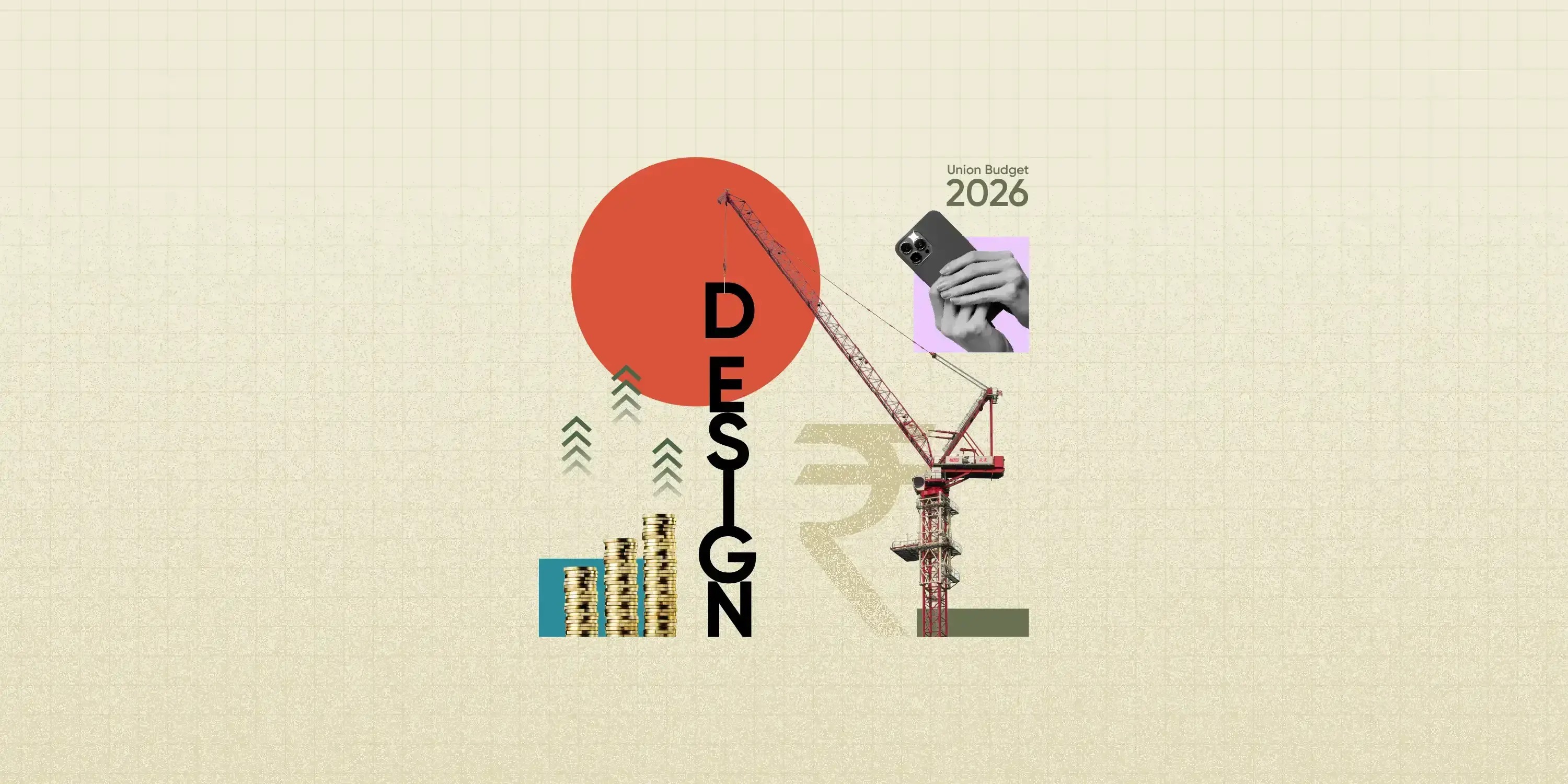
For years, India’s design industry has grown quietly in the background, shaping apps, products, films, games, brands, and digital experiences, all without always being seen as a serious economic force.
The Union Budget 2026-27 changes that narrative.
Without flashy headlines, this year’s budget places creativity, design, and digital content inside India’s long-term growth story. It signals a shift from seeing design as decoration to recognising it as infrastructure for innovation.
And that shift is significant.
One of the clearest signals is the government’s renewed focus on the Orange Economy, the part of the economy driven by creativity, culture, and intellectual property. This includes design services, animation, VFX, gaming, comics, and digital content creation. For designers, this isn’t just a new buzzword. It’s policy language that validates what the industry has known for years: creative work generates jobs, exports, and intellectual property just like manufacturing or technology does.
When creativity becomes part of economic planning, funding and institutional support usually follow. Design is no longer sitting at the edge of policy conversations; it’s being pulled toward the centre.
But recognition alone doesn’t build an industry. Talent does. And this is where the budget makes one of its boldest moves.
The announcement of AVGC Content Creator Labs in 15,000 schools and 500 colleges could reshape how India discovers and develops creative talent. These labs, supported by the Indian Institute of Creative Technologies in Mumbai, are designed to expose students to animation, visual storytelling, gaming tools, and immersive media technologies early in their education.
That exposure matters far beyond entertainment. Modern design careers, from UI/UX to motion design and interactive storytelling, rely on the same digital foundations. By introducing these tools at school and college levels, India is normalising design and creative technology as legitimate career paths, not niche interests people “stumble into” later.
It also widens access. Until now, serious exposure to design tools often depended on geography, privilege, or specialised institutions. Bringing creative tech labs into mainstream education could unlock talent from towns and cities that were never part of India’s traditional design map.
At the professional education level, the proposed new National Institute of Design (NID) in eastern India signals another important development. India has long had far more demand for trained designers than its institutions could supply. Expanding NID’s footprint is not just about adding seats, it’s about recognising design education as national capability building.
More importantly, it decentralises opportunity. For decades, India’s design ecosystem has been concentrated in a handful of cities. A new NID campus in the east could spark regional creative clusters, local studios, and industry partnerships that bring new cultural perspectives into mainstream design.
The budget also hints at a future where education and industry work more closely together. With university townships and skill clusters being developed near industrial and logistics corridors, students are more likely to learn in environments connected to real economic activity. For designers, that means more live projects, cross-disciplinary collaboration, and exposure to sectors like manufacturing, mobility, retail, and fintech, all of which increasingly depend on design to stay competitive.
What’s emerging is a much bigger transition. India is gradually shifting from being viewed as a low-cost execution hub for global creative work to positioning itself as a design-led innovation economy. A larger talent pipeline, earlier skill development, and stronger institutions create the conditions for original intellectual property, globally competitive studios, and homegrown creative technology companies.
None of this will transform the industry overnight. Policies take time to translate into classrooms, studios, and jobs. But direction matters. And this budget sets a direction where designers are not just stylists at the end of a process, but problem-solvers at the beginning.
For students, it means design careers may become more visible and accessible than ever before. For professionals, it signals growing demand across digital products, immersive media, and experience-driven industries. For studios and educators, it opens the door to deeper collaboration with institutions and a new generation of talent entering the field with stronger digital foundations.
Design wasn’t the headline act in the 2026-27 Union Budget. But between the lines, it makes a clear statement: creativity is no longer peripheral to India’s growth story.
It’s becoming one of the engines driving it.
Sharing is caring